













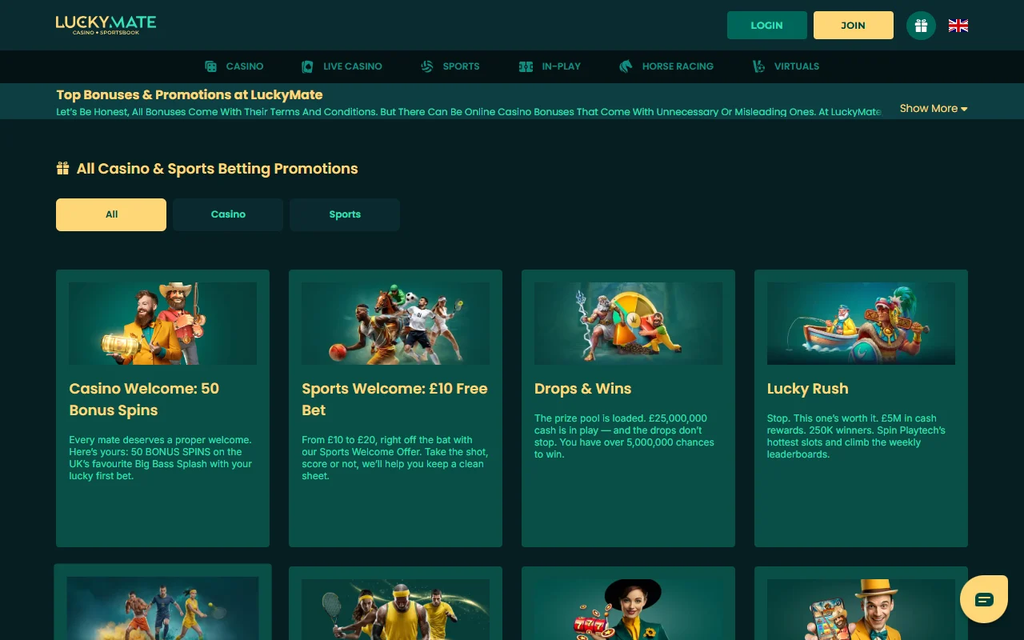
Lucky Mate Casino No Deposit Bonus Australia

Adult players in Australia can claim introductory offers at Lucky Mate Casino in 2026 with clear steps, limits, and calmer habits.

Fortune Gems 2 Slot

Table of Contents

  • The Dog House Megaways Slot
  • _SEG1__Lucky Joker 10 Extra Gifts Slot
  • _SEG2__Sword of Ares Slot
  • _SEG3__Floating Dragon Hold & Spin Slot
  • _SEG4__Leprechaun Riches Slot
  • Fruit Cocktail Slot
  • The Dog House Megaways Slot
  • _SEG2__Sword of Ares Slot
  • Fruit Million Slot
  • The Dog House Megaways Slot
  • Big Fisherman Slot
  • _SEG1__Big Fisherman Slot
  • _SEG2__Seven Books Unlimited Slot
  • _SEG3__Lucky Mate Casino Fortune Slot
  • _SEG2__Sword of Ares Slot
  • _SEG3__Floating Dragon Hold & Spin Slot
  • _SEG4__9 Mad Hats Slot
  • _SEG3__Floating Dragon Hold & Spin Slot
  • Big Bass Splash Slot
Bonus 1

How Lucky Mate Casino Bonus Offers Work In 2026

Most “welcome deals” look simple until you accept one while distracted. Picture this: you’re on a break, you see an offer banner, you tap “accept,” and only later notice there were conditions you didn’t read because you were already hunting for a game. The smarter move is to treat offers like settings, not like prizes.

In 2026, the real value of any promotion is shaped by three practical questions: what triggers it, what it applies to, and what can block a withdrawal while it’s active. If you can answer those in two minutes, you avoid the classic frustration where a player tries to cash out and feels surprised by steps they skipped earlier.

Another thing most people miss is timing. Some offers are best used on your first calm session, when you can play slowly and learn the platform. Others are better later, when you already know where limits, history, and support live. Imagine trying a new platform and a new offer at the same time - that combo is where “small mistakes” happen.

Keep your expectations grounded. Access in Australia is intended for adults of legal age and can depend on applicable rules and individual eligibility. That means you should rely on what you can confirm on-screen: your account status, the offer rules shown in your profile, and the cashier steps you can actually open.

The Two-Click Check Before You Accept Anything

Before accepting an offer, do two clicks: open the terms panel and open the cashier screen. Imagine you accept first and read later - now you’re emotionally “in,” and reading feels like a chore. Flip that order and the decision becomes calm.

Look for plain-language items: minimum deposit (if any), game restrictions, and how winnings are treated while the offer is active. If the text feels vague, don’t force it. A clean session without extra conditions is sometimes the better value for your mood.

Common Terms That Change The Real Value

A lot of players focus on headline numbers and ignore small details that matter more. Picture a player who thinks an offer applies to everything, then discovers it only applies to a narrow set of games. That’s not a scandal, it’s a reading problem.

Pay attention to playthrough requirements, maximum cashout rules (if mentioned), and time windows. Also watch for conditions tied to payment methods, because some methods may behave differently in the cashier flow. If you’re unsure, keep your first session small and treat it like a test run.


Eligibility And Adult-Only Access In Australia

A platform can feel smooth until you hit the first “confirm your details” moment. Imagine you’ve already started playing, then you get asked to verify something and it feels like a speed bump. This is why adult-only access and eligibility checks should be handled early, not when you’re already invested.

Bonus 2

Treat your account setup like a boring checklist: profile details, recovery options, and any identity prompts that appear in your account area. The goal is not to rush through the steps - it’s to make future sessions calmer, especially if you plan to move money in or out later.

Keep your information consistent. Small mismatches create extra back-and-forth that feels unnecessary, even when it’s just a system doing a consistency check. If you ever feel impatient, pause and come back later. Admin steps done calmly are almost always faster than admin steps done angry.

Verification Timing And Why It Matters

Imagine you try to withdraw later and realize your profile isn’t complete. That’s when the process feels “hard,” because you’re trying to do paperwork while emotional. Do the paperwork first, then play.

Use good lighting for any document images, keep edges visible, and submit one clean version instead of three rushed attempts. If you get asked again, fix the specific issue and resubmit once. Random resubmits create confusion in your own history and often slow down review.

bonus 3

Claiming A Sign-Up Offer Without A First Payment

People love the idea of a free start, but they often approach it the wrong way. Picture someone trying to squeeze maximum value from a sign-up freebie on their first night, then getting frustrated because they don’t understand the rules yet. The calmer approach is to treat a no-upfront-cost offer as a learning tool, not as a profit plan.

Start with the basics: create the account, confirm your contact details, and check your account dashboard for active promotions. If the offer requires a specific activation step, do it slowly and take a screenshot in your mind (where was the button, what did it say). Players often forget whether they activated something and then guess later.

Next, set limits before you play. This part sounds unexciting, but it’s what separates a controlled session from a messy one. Imagine you start with a free offer, it goes well, and you suddenly feel tempted to chase “one more round” because you didn’t spend anything. That’s a trap: time and attention still cost something.

Choose a simple game type for the first session. If you jump into the most complicated option immediately, you’ll spend your free allocation learning rules instead of enjoying the session. Many players do better starting with something familiar, then exploring later when they’re not juggling “new platform + new offer + new rules” all at once.

If the platform shows any limitations on where the free allocation can be used, respect that. The fastest way to feel disappointed is to assume the offer works everywhere and then hit a restriction. Read once, pick accordingly, and move on.

Finally, decide what “success” means for this first session. Sometimes success is simply understanding how the platform labels history entries and where the support chat sits. If you end the session knowing where things are, you’ve already won something valuable: future calm.

Deposits, Withdrawals, And Bonus Wallet Habits

Money actions are where emotions sneak in. Picture a player who deposits, has a small loss, and instantly tries to “fix” the feeling with another deposit. That behavior is common, and it’s exactly why you want a routine that keeps money decisions separate from play decisions.

In 2026, a clean approach is to create two modes: “admin mode” and “play mode.” In admin mode, you set limits, decide a budget, and handle any account prompts. In play mode, you do not change budgets or chase with extra funding. Keeping those modes separate prevents the cashier screen from becoming a mood lever.

Withdrawals should be treated like paperwork. One clean request, stable details, and patience while statuses update is usually smoother than repeated cancellations and resubmissions. Imagine you submit a request, then start editing profile details “to be safe.” That can create extra checks and make the flow feel longer.

Transaction history is your anchor. Learn where it is, learn how entries are labeled, and check it after sessions, not during emotional moments. When you know what you’re looking at, you stop panic-refreshing.

Keeping Deposit Decisions Separate From Play Mood

Imagine you set a budget, deposit once, and start playing. Ten minutes later you feel tempted to top up because the session isn’t going your way. Instead of clicking, pause and ask one question: “Am I still entertained, or am I trying to erase a feeling?” That pause is often the difference between a short session and a long spiral.

A simple rule helps: one planned deposit per session, then no reloads. If you want to play longer next time, plan a larger budget upfront rather than topping up mid-session. This keeps your decisions adult and deliberate.

Cashout Planning When A Promotion Is Active

Picture the moment you want to withdraw and you realize an offer is still active on your account. The wrong move is to start clicking around randomly, cancelling requests, and changing settings in a panic. The better move is to read the current offer status, confirm what is required (if anything), and submit one clean request.

If the platform asks for a verification step, do that step once with good quality and then stop. Repeated submissions usually create more review work. Also avoid changing personal details while a withdrawal is pending, because stability often matters in these flows.

Transaction History: Reading It Like A Ledger

Imagine you finish a session and later can’t remember whether you funded once or twice because you were distracted. Build a short ritual: open the history screen, scan the latest entries, and log out. Two minutes of checking prevents hours of doubt and makes support conversations easier if you ever need them.

Using A Lucky Mate Casino Promo Code The Clean Way

Codes can be useful, but only if you treat them like a controlled step, not a scavenger hunt. Picture a player pasting a code in three different places, getting an error, then assuming the platform “doesn’t work.” In reality, most code issues come from timing, formatting, or eligibility conditions.

The clean approach is to pick one moment to apply a code: during signup, during a deposit step, or in a dedicated promotions field if the account area provides one. Apply it once, confirm it registers, then move on. If you keep re-entering variations, you create uncertainty about what actually happened.

It also helps to know why codes fail. Sometimes it’s as simple as an extra space from copy-paste. Sometimes the code is limited to certain users or time windows. Sometimes it applies only to specific products. None of that is personal, but it feels personal if you’re in a hurry.

Here’s a simple table to help you compare common offer styles without getting stuck in headline numbers.

Offer Style

Typical Trigger

Best For

What To Watch

Code-based deal

Entering a coupon-style string

Players who like clear steps

Typos, extra spaces, limited time windows

Deposit match

Funding the account once

Planned sessions with a set budget

Playthrough rules, restricted game lists

Free spins bundle

Activating an intro pack

Trying new slot titles calmly

Eligible titles only, expiry periods

Cashback style

Finishing a session period

Players who want smoother variance

Caps, minimum activity conditions

Reload offer

Returning after first sessions

Regular players with routines

Limits per day/week, opt-in steps

Loyalty rewards

Ongoing play and missions

Long-term pacing, not quick wins

Tier rules, points conversion details

Where Codes Usually Appear And How To Enter Them

Imagine you’re signing up and you see a field for an optional code. That’s the easiest time to apply it because the flow is designed for it. If you don’t see it there, check the cashier deposit screen or a promotions section in your account settings.

When you enter a code, type it carefully or paste once and then remove any trailing spaces. Don’t “test” it multiple times in a row. One entry, one confirmation, then continue. If it doesn’t work, stop and troubleshoot calmly rather than brute-forcing.

If The Code Fails: A Calm Troubleshooting Flow

Picture getting an error and immediately trying five different versions. That creates stress and doesn’t help. Instead: confirm you’re using the right keyboard layout, remove extra spaces, and check whether the offer has a time window or eligibility note in the same screen.

If it still fails after one clean retry, step away and contact support with a simple message: what you entered, where you entered it, and what the error said. A clear report gets you further than repeated guessing.

Building A Session Plan That Beats Chasing

Promotions are the easiest way to drift into “just one more.” Imagine you start with an offer, you feel like you’re playing with house money, and suddenly you’re still there an hour later because stopping feels like leaving value on the table. The fix is a session plan that treats stopping as part of the value.

Start with a timer. Set it before you open a game. When it rings, you stop, log out, and do something else. That clean exit is the adult move, especially when offers create the illusion that time doesn’t matter.

Then set a spending cap that you can accept losing without stress. If you plan to deposit, deposit once and keep the cashier closed. If you plan not to deposit, treat the session as learning and entertainment, not as a “prove something” challenge.

Use cooling-off tools when mood shifts. The mood shift often happens after a win (“I’m on a roll”) or after a loss (“I need it back”). Both stories are emotional. A short break resets your decisions. Stand up, drink water, and return only if you feel neutral.

If you notice repeated urges to reload, extended play beyond your plan, or play that feels compulsive, stronger boundaries like self-exclusion or longer breaks can protect you. These tools aren’t a label, they’re a practical pause for adults who want entertainment to stay entertainment.

Finally, remember why you came. If the goal was a calm session, don’t turn it into a second job. Offers should support your plan, not replace it. A small, controlled session that ends on time is often a better outcome than a long session that leaves you tired and annoyed.

FAQ

Start by checking the trigger, the restrictions, and what could block a withdrawal while the offer is active. Imagine you accept first and read later - you’re already emotionally invested, so the terms feel annoying instead of helpful. A two-minute review of eligibility notes, game limitations, and time windows usually tells you whether it fits your style. If anything feels unclear, skip it for the first session and play with a clean balance so you stay in control.

Treat it like a learning session, not a profit mission. Pick a simple game type, set a timer, and focus on understanding where your limits and history screens are located. Many players try to maximize value immediately, then get frustrated because they’re juggling new rules and a new platform at once. A calmer approach is to play briefly, learn the menus, and leave with confidence rather than with tension.

Because promotions can add conditions that affect how winnings are handled until requirements are met or the offer is cleared. Imagine you submit a cashout request and then start changing profile details in a panic - that can create extra checks and slow everything down. The cleaner move is to keep details stable, submit one clear request, and respond only to the exact prompt asked for. Checking status on a schedule helps you avoid stress-clicking.

Use boundaries you set before the session starts: a timer, a spending cap, and a rule against topping up mid-session. Picture the urge to “keep going” because the session feels unfinished - that’s usually emotion, not logic. Take a short break after any big swing and return only if you feel neutral. If the urge to chase keeps coming back, end the session and take a longer pause.

Don’t brute-force it. Re-enter once carefully, remove extra spaces from copy-paste, and check whether the screen shows any eligibility or timing notes. Many failures come from simple formatting issues or from applying the code in the wrong place. If it still doesn’t work, contact support with a clear description of where you entered it and what error appeared. One tidy message usually solves it faster than repeated attempts.

Decide the budget and deposit once, then close the cashier screen and stick to your plan. Imagine you feel tempted to top up to “fix” a mood - pause and label it as an emotion before you act. A simple one-deposit-per-session rule protects you from drifting into reload behavior. If you want more time next session, plan it upfront instead of funding mid-play.

Use a short timeout when you notice faster clicking, rising stakes, or an urge to keep playing just to change how you feel. Those are early signals that your mood is driving decisions. A longer break makes sense if you keep returning out of habit or you find it hard to stop even when you’re not enjoying it. The goal is to keep adult entertainment healthy by making stopping easier than chasing.